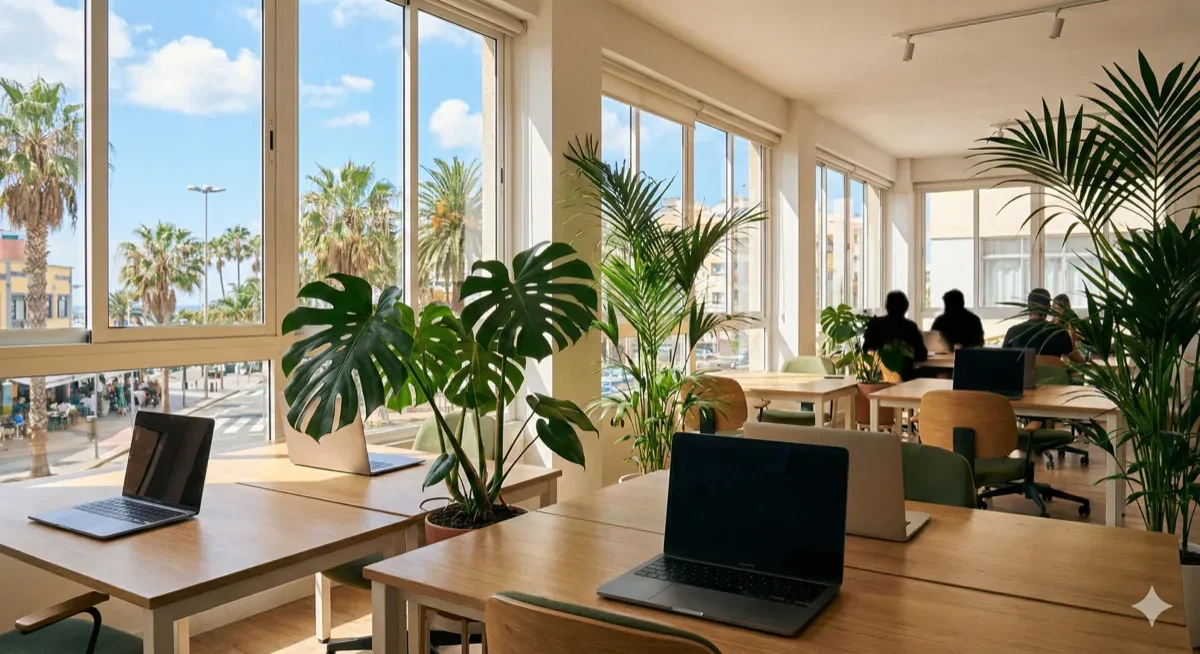
Las Palmas de Gran Canaria appears year after year in the rankings of the best cities in the world for remote work. But this trend isn’t just an interesting statistic — it’s a concrete opportunity for apartment owners across the islands.
Why digital nomads choose the Canary Islands
The combination is hard to beat: spring-like weather year-round, high-speed internet, a reasonable cost of living compared to northern Europe, direct flights to major European capitals, safety, public healthcare, and an increasingly vibrant social scene.
Las Palmas is home to the largest community of remote workers in the archipelago, but Santa Cruz de Tenerife, La Laguna, and areas in the south of both islands are growing rapidly. Even Lanzarote and Fuerteventura are starting to position themselves as quieter alternatives. If you want to know where the demand is concentrated, see our analysis of the best areas to invest in rental property in the Canary Islands.
We’re not talking about backpacker tourists. The typical digital nomad who lands in the Canary Islands is a professional with a medium-to-high income (typically between 2,500 and 6,000 per month) who’s looking for quality accommodation for stays of 1 to 6 months.
What they look for in accommodation
Understanding what this type of tenant values is key for any property owner who wants to tap into this demand:
Must-haves:
- Fibre-optic internet (minimum 100 Mbps symmetric)
- A desk or dedicated workspace in the room
- Good natural light
- Fully equipped kitchen
- Central location or good public transport connections
Highly valued:
- Private room with an ensuite or bathroom shared with few flatmates (room-by-room rental versus whole-apartment rental has clear advantages for this profile)
- Well-maintained common areas
- Flexible contract without excessive lock-in periods
- Utilities included in the price
- Washing machine in the apartment
They don’t care about:
- Television (they use their laptop)
- Parking (most don’t have a car)
- Large room size (they prioritise quality over square metres)
What this means for property owners
If your apartment meets the basic requirements — good location, decent internet, and bright rooms — you have access to a demand segment that pays above the traditional market rate and treats apartments with respect.
A digital nomad paying 500-600 per month for a room in a shared apartment is not a tenant who’s going to cause you problems. They have stable income, they’re looking for a quiet place to work, and they know that if they damage the accommodation, negative reviews will close doors for them in the future.
Advantages of this tenant profile for property owners
- Proven solvency. Regular, verifiable income, often higher than that of the average local tenant.
- Low conflict. Professionals focused on their work, not on throwing parties.
- Predictable turnover. Stays are medium-term (2-6 months), which allows you to adjust prices periodically.
- Year-round demand. Unlike holiday tourism, digital nomads come in every season. In fact, the European winter (October to March) is their peak season in the Canary Islands.
- Willingness to pay more for quality. A well-equipped apartment can command a premium over the local market rate.
How to adapt your apartment to this demand
You don’t need a full renovation. Small investments can multiply the appeal of your apartment for this profile (we have a detailed guide on how to prepare your apartment for rental in the Canary Islands without spending a fortune):
- Internet: If you don’t have fibre optic, get it. It’s the investment with the highest return. A digital nomad will not rent an apartment with slow internet. Full stop.
- Desk: A simple 120 cm desk with a good office chair in each bedroom. Cost: 150-300 per room. Return: immediate.
- Lighting: A good desk lamp with neutral light. 30-50.
- Quality bedding and towels. It’s not a hotel, but decent sheets and enough towels make a real difference. 80-120 per room.
- Functional kitchen. You don’t need designer appliances, but everything must work: hob, fridge, oven or microwave, basic utensils.
Total indicative investment for a 3-bedroom apartment: 800-1,500. If that allows you to charge 100 more per room per month, the investment pays for itself in less than 2 months.
The challenge: management
Here’s where it gets complicated. Attracting digital nomads means being present on the platforms where they search for accommodation, responding quickly to enquiries (often in English), managing frequent check-ins and check-outs, and maintaining a consistent quality standard.
If you live on the island and have the time, you can do it yourself. But if you have a job, a family, or simply don’t want to spend hours on management, the most efficient approach is to delegate.
Rent-to-rent companies like Looping Rooms specialise in exactly this: capturing medium-stay demand, managing tenant turnover, and guaranteeing you a fixed monthly rent without you having to lift a finger.
Conclusion
Digital nomads are not a passing fad. They are a structural demand segment that will continue to grow in the Canary Islands. Property owners who position themselves now to capture this demand — whether on their own or by delegating management — will achieve profitability well above the traditional rental market for years to come.
If you have an apartment in the Canary Islands and want to know how to get the most out of it, request a free valuation. We’ll tell you exactly how much you could earn each month, with no obligation.
Do you own a property in the Canary Islands?
Let us manage it. Guaranteed rent, no worries.
Request information with no obligation.